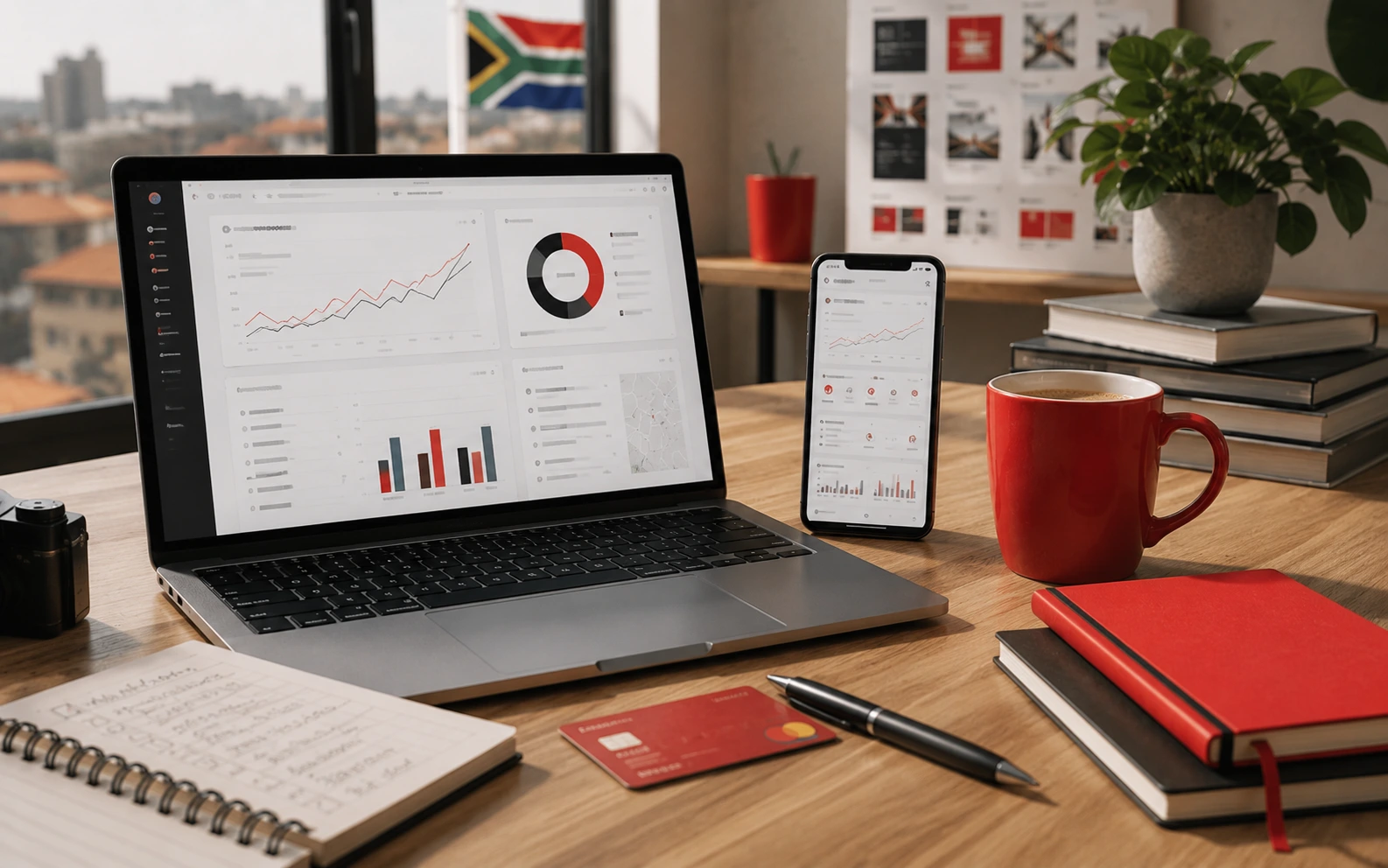
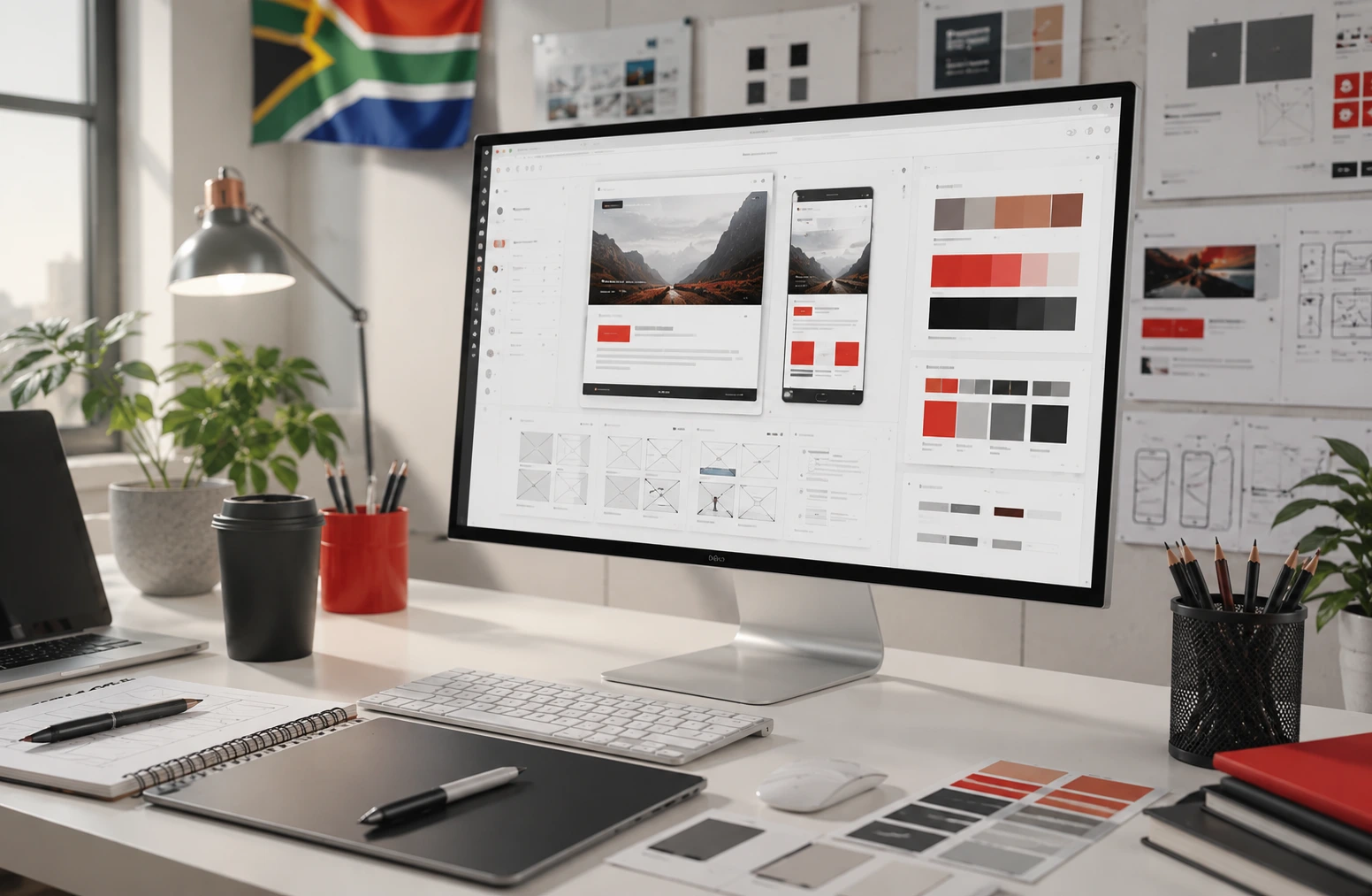
The rise of AI tools like Wix ADI, Framer AI, Squarespace AI, and even AI coding assistants has sparked a burning question across South Africa's digital industry: will web designers be replaced by AI? It's a fair concern. AI can now generate landing pages in seconds, write copy, choose colour palettes, and produce HTML and CSS. For a country where digital skills are in demand but budgets are often tight, AI-assisted design sounds appealing to many business owners. But here is the truth: AI is a tool, not a replacement — and understanding the difference will determine whether South African web designers thrive or get left behind.
What AI Tools Can Actually Do in Web Design
AI design tools have come a long way. In 2026, platforms like Wix, Framer, and Webflow use AI to automate repetitive tasks that used to take hours. Here is what they do well:
- Generating basic layouts from a text prompt
- Suggesting colour schemes based on brand inputs
- Writing placeholder copy or SEO meta descriptions
- Resizing and reformatting designs for mobile screens
- Coding standard UI components like buttons, forms, and navigation bars
For a small South African business that needs a simple five-page website, an AI tool can produce something functional quickly and cheaply. Platforms like Wix ADI and Squarespace's AI builder can get a basic site live in under an hour. So yes — AI is already changing the entry-level web design market in South Africa. But that is only part of the picture.
What AI Still Cannot Do in Web Design
Despite the hype, AI tools consistently struggle with anything that requires real strategic thinking, local context, or creative problem-solving. Here is where they fall short:
Understanding the South African market. AI tools are trained on global data. They do not understand South African consumer behaviour, local trust signals, payment preferences like SnapScan or Peach Payments, or why certain design choices read differently in local cultural contexts. A Johannesburg-based law firm and a Cape Town surf brand need radically different websites — and AI cannot reliably tell the difference without a skilled designer guiding the process.
Building and managing client relationships. Web design is a service business. South African clients — especially SMEs across Johannesburg, Cape Town, Durban, and Pretoria — value communication, local knowledge, and a designer who understands their industry and timeline pressures. No AI tool can attend a client brief, manage expectations, or adapt gracefully to last-minute scope changes.
Complex custom development. E-commerce sites, booking systems, membership platforms, and WordPress builds with custom functionality are still firmly in the domain of skilled developers and designers. AI can assist with code snippets, but it cannot architect, test, and troubleshoot complete systems end to end — especially in South Africa's specific hosting and payment gateway environment.
Brand identity and storytelling. A strong website does more than look good. It communicates a brand's story, values, and personality in a way that builds trust with the right audience. This requires empathy, strategic thinking, and an understanding of what makes a South African business feel credible and trustworthy online. That is a deeply human skill.
The Real Impact on South African Web Designers
The web designers most at risk are those who offer only one service: building basic template websites. If your entire offering is a standard WordPress setup using a premium theme for a fixed low price, then yes — AI tools and no-code platforms will undercut you on speed and cost.
But web designers who offer a full-service approach — covering strategy, UX thinking, conversion optimisation, content planning, and ongoing support — are becoming more valuable, not less. Clients are not just buying a website. They are buying expertise, accountability, and results.
AI is also creating new opportunities for designers who embrace it. South African designers who learn to use tools like Framer AI, Webflow, Figma AI, and AI coding assistants are completing projects faster than ever. What used to take two weeks can now take four days. That means higher profit margins, more clients served, and more competitive pricing for local businesses.
How South African Web Designers Can Stay Relevant in 2026
If you are a web designer in South Africa wondering how to future-proof your career, here is what actually matters:
1. Learn to use AI, not fear it. Integrate AI into your workflow. Use it to generate first drafts, write copy variations, or prototype layouts quickly. Designers who work with AI will consistently outperform those who treat it as a threat.
2. Specialise in a niche. Healthcare, legal, property, e-commerce, and non-profits all need websites that deeply understand their industry. Generic designers get replaced by generic tools. Specialists build deeper value that AI cannot easily replicate.
3. Offer strategy alongside design. Most South African businesses do not just need a website — they need a website that converts visitors into paying clients. If you can offer SEO strategy, Google Ads landing page advice, or conversion rate analysis alongside your design work, you move from being a supplier to being a trusted digital partner.
4. Build long-term retainer relationships. Monthly retainers for maintenance, updates, content publishing, and digital growth are essentially AI-proof. Clients who trust you will stay with you rather than switching to a self-managed AI builder that still requires their time and attention.
5. Upskill in UX and accessibility. South Africa's growing focus on digital inclusion means accessible, user-friendly websites are increasingly important to government, NGO, and enterprise clients. UX design and accessibility are skills that are genuinely difficult to automate — and in short supply locally.
The Bottom Line
AI will not replace skilled web designers in South Africa — but it will replace those who refuse to adapt. The designers who treat AI as a powerful assistant will work faster, earn more, and deliver better results for their clients. Those who ignore it will find their lower-end work gradually replaced by tools that cost nothing per month.
The South African digital economy is growing. E-commerce adoption is accelerating. Small businesses are spending more on their online presence than ever before. The opportunity for web designers is bigger than it has ever been — but only for those willing to evolve alongside the tools that are reshaping the industry. AI is a power tool. In the hands of a skilled South African web designer, it is one of the most exciting developments the profession has seen in years.