
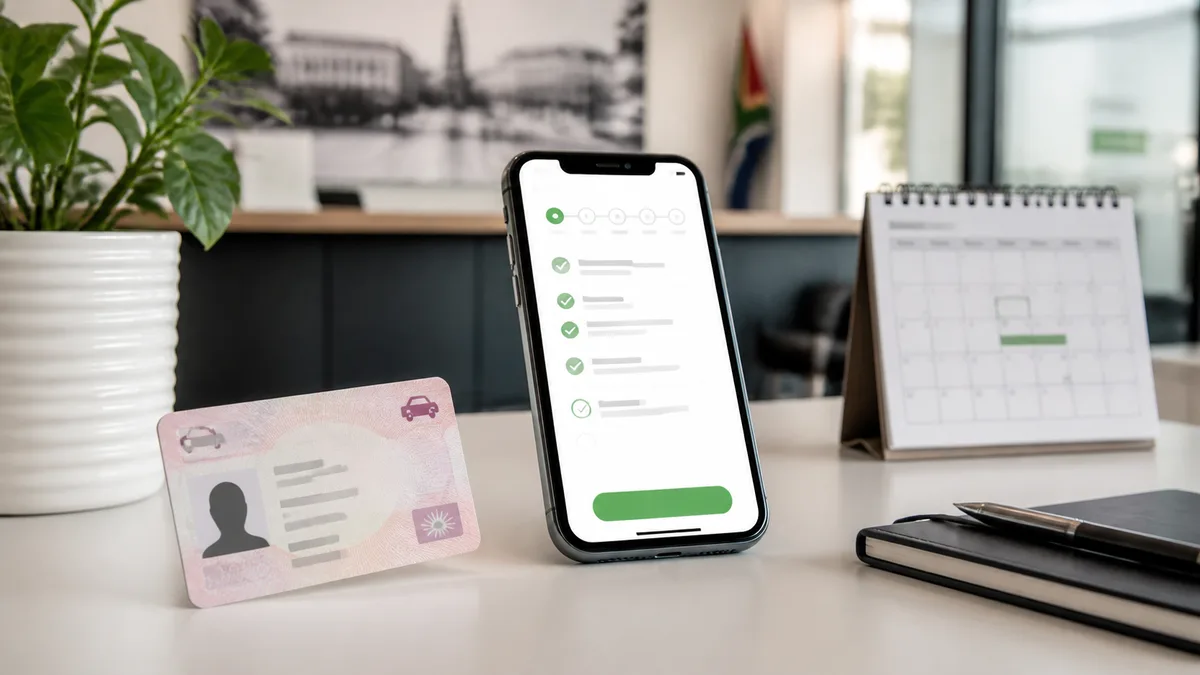
South Africans are searching for driving licence changes because Cabinet approved a move from five-year to 10-year validity for many light motor vehicle and motorcycle licence cards. That sounds simple, but it has created confusion: must you still renew, can you wait, and which online service should you trust?
The answer is clear for now. The 10-year change still needs legal implementation, so motorists must continue renewing expired driving licence cards until the new law takes effect. This guide explains what changed, what has not changed yet, how online NaTIS services fit in, and how to avoid fake renewal links.
Key Takeaways
- Cabinet approved a 10-year validity period for Codes A, A1, B and EB driving licence cards.
- The change applies to light motor vehicles and motorcycles, not heavy commercial cycles or PrDP renewals.
- The 10-year period is not automatic yet because regulations still need to be amended.
- Motorists must continue renewing expired driving licence cards until the new law takes effect.
- The official government renewal page points users to online NaTIS for renewal applications.
- You still need eye testing, fingerprints and required documents.
- Avoid renewal links sent by random SMS, WhatsApp or social media posts.
What Changed with Driving Licence Validity?
Cabinet approved extending the validity period for driving licence cards for Codes A, A1, B and EB from five years to 10 years. Government said the goal is to reduce renewal pressure, improve administrative efficiency and align with international practice.
The important detail is timing. Approval is not the same as immediate implementation. The extension requires amendments to road traffic regulations before it becomes active. Until that process is complete, motorists should not ignore an expired or expiring card.
This matters because many readers see a headline and assume they can delay renewal. That is risky. If your card expires before the new law is in force, you may still need to renew and may need a temporary licence if you renew late.
Who Will Benefit from the 10-Year Validity Period?
The announced extension applies to light vehicle and motorcycle categories: Codes A, A1, B and EB. Heavy commercial and public transport vehicles remain on existing renewal cycles, while Professional Driving Permits continue on a two-year renewal cycle.
That means the change is mainly aimed at ordinary motorists. If you drive a private car, small bakkie or motorcycle, the future renewal cycle should become less frequent once the law takes effect. If you drive professionally, transport passengers, operate heavy vehicles or rely on a PrDP, you should not assume the same 10-year rule applies to you.
For businesses, this matters for fleet administration. Small companies with sales vehicles may benefit later, but logistics, taxi, bus, courier and heavy transport operators will still need tighter renewal tracking.
Must You Still Renew Your Licence Card Now?
Yes. Government has advised motorists to continue renewing expired driving licence cards until the new law takes effect. The official renewal guidance also says you should renew four weeks before expiry.
If you renew after the card has expired, you may need to apply for a temporary driving licence while waiting for the new card. The government renewal page says a new driving licence card usually takes four to six weeks to be ready.
The safest approach is to treat the current printed expiry date as active unless an official government update says otherwise. Do not rely on a screenshot, forwarded voice note or social media claim.
How Do NaTIS Online Services Fit In?
The official government renewal page directs residents to apply online through the NaTIS online portal. NaTIS services are part of South Africa's move toward more digital public services, including booking renewals and handling some vehicle-related transactions.
Online booking does not remove every physical requirement. You may still need to visit a driving licence testing centre for fingerprints, photographs, eye testing and document submission. You can also have an eye test done by an optometrist and submit the report, where accepted.
Before using any online service, type the address yourself or start from an official government page. Do not click renewal links from unsolicited messages. Scammers often copy public-service language because it feels urgent and familiar.
What Documents Do You Need for Renewal?
The government renewal page lists several common requirements. Requirements can vary slightly by licensing office, so confirm locally before going.
Typical items include:
- South African ID and a copy, old driving licence card, or valid passport
- ID photographs, after confirming how many the DLTC needs
- Proof of residential address
- An affidavit if the utility bill is not in your name
- A ward councillor letter if you live in an informal settlement
- Prescribed application fee
- Eye test results, either at the DLTC or from an optometrist where accepted
- Completed DL1 renewal form
For busy motorists, the biggest mistake is arriving without proof of address or photographs. Check before you leave home.
How to Avoid Fake Driving Licence Renewal Links
Driving licence changes create a perfect opportunity for scams. People are worried about deadlines, queues and penalties, so they are more likely to click a link that promises quick help.
Use this safety checklist:
- Start from official sites: Use
gov.zaor the official NaTIS portal. - Check the domain carefully: Fake sites may use similar-looking names.
- Do not share OTPs: No legitimate renewal helper should need your banking OTP.
- Avoid WhatsApp agents: Be cautious of people promising guaranteed bookings for a fee.
- Use secure payments only: Confirm 3D Secure and bank alerts.
- Keep proof: Save receipts, booking confirmations and reference numbers.
- Report suspicious links: Notify your bank and relevant platform if you entered details.
What Should Businesses Do?
Businesses should update fleet and staff licence tracking. Even if the 10-year rule reduces future renewal frequency, there is still a transition period. HR, admin or fleet managers should keep current reminders until official implementation is confirmed.
For small businesses, a simple spreadsheet can help:
| Field | Why It Matters |
|---|---|
| Driver name | Accountability |
| Licence code | Renewal rule may differ |
| Card expiry date | Avoid missed renewals |
| PrDP status | Separate renewal cycle |
| Renewal booking date | Proof of action |
| Temporary licence needed | Reduces operational risk |
This is especially important for delivery companies, school transport providers, sales teams and service businesses that depend on drivers.
Frequently Asked Questions
1. Has South Africa changed driving licence validity to 10 years?
Cabinet approved the extension for Codes A, A1, B and EB, but it still requires legislative amendments. Until the new law takes effect, motorists must continue renewing expired driving licence cards under the current process.
2. Which driving licence codes are affected by the 10-year change?
The announced extension applies to Codes A, A1, B and EB. Heavy commercial and public transport vehicles remain on existing cycles, and Professional Driving Permits remain on a two-year renewal cycle.
3. Can I stop renewing my licence card now?
No. Government has said motorists must continue renewing expired driving licence cards until the new law takes effect. If your card is expiring, follow the current renewal process.
4. Can I renew my driving licence online in South Africa?
You can start the renewal process through official NaTIS online services, but physical steps may still be required. You may need to visit a DLTC for fingerprints, photographs, payment and eye-test processing.
5. How long does a new driving licence card take?
The South African Government renewal page says a new driving licence card is usually ready in four to six weeks. If you renew after expiry, you may need a temporary licence while waiting.
6. How do I avoid fake NaTIS renewal websites?
Start from official government pages, type the address yourself, check the domain, avoid unsolicited WhatsApp links, never share banking OTPs and keep all proof of payment and booking confirmations.
Conclusion
Driving licence changes in South Africa are important, but they are not instant. The 10-year validity approval is good news for many motorists, yet the current renewal rules still apply until the legal change is in force.
For now, renew on time, use official NaTIS and government channels, prepare your documents, and be careful with links sent through WhatsApp, SMS or social media. The safest motorist is the one who follows official updates, not forwarded rumours.